
Introduction
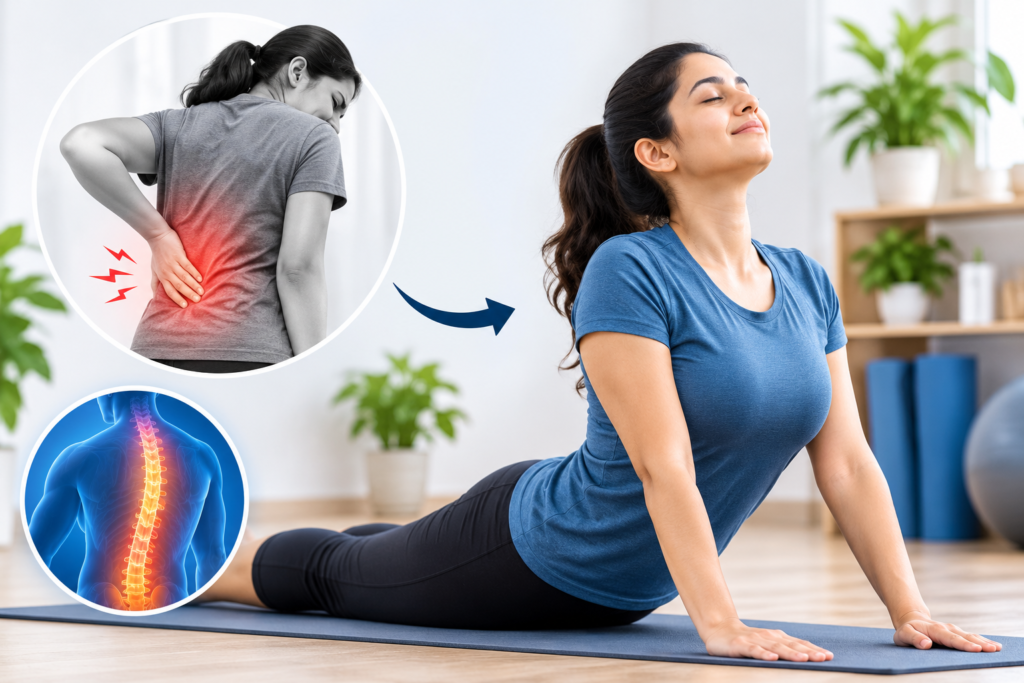
Back pain is a common problem that can affect people of different age groups. Long working hours, poor posture, limited physical activity, and daily lifestyle habits may contribute to discomfort in the lower or upper back. For many people, back pain can make simple activities such as sitting, walking, bending, and sleeping uncomfortable. One approach that may support better back health is yoga. Through gentle movements, stretching, breathing exercises, and relaxation techniques, yoga can help improve flexibility and physical function. But can yoga actually help relieve back pain? The answer is yes, in some cases. Research suggests that regular, appropriately modified yoga practice may provide modest benefits for people with chronic lower back pain. However, the right exercises depend on the individual’s condition and physical ability.
How Yoga for Back Pain Can Help
Yoga combines physical postures, controlled breathing, and mindfulness to support overall well-being. When practised correctly, it may help people with certain types of back discomfort by improving movement and strengthening supporting muscles.
Here are some potential benefits:
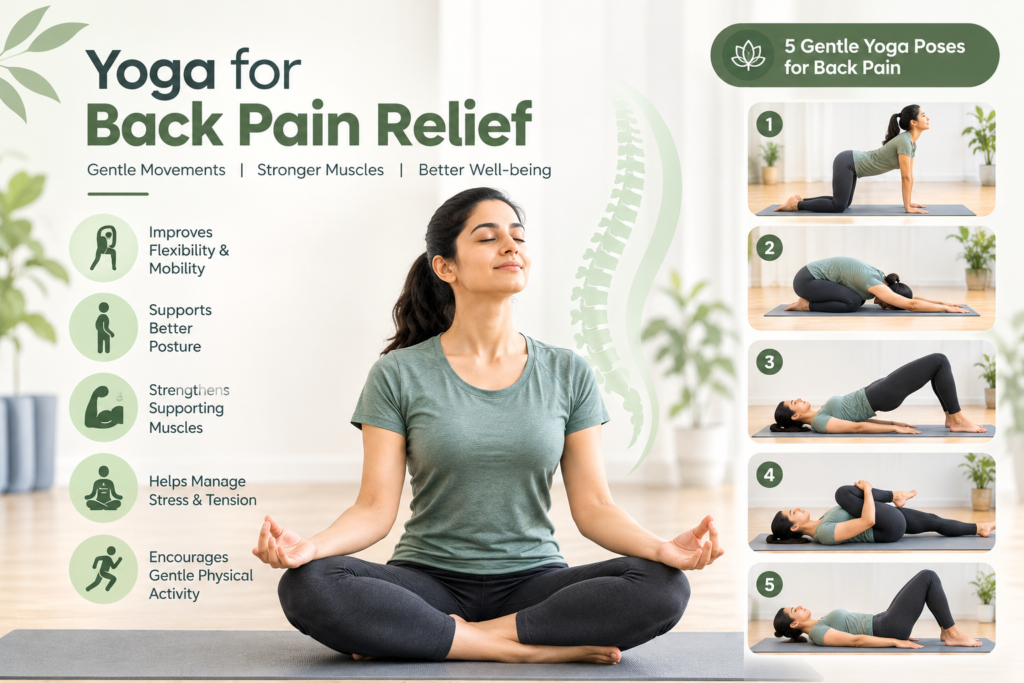
1. Improves Flexibility and Mobility
Tight muscles around the hips, hamstrings, and back may contribute to movement difficulties. Gentle yoga movements can help improve flexibility and make everyday activities more comfortable.
2. Supports Better Posture
Poor sitting and standing habits can place additional strain on the back. Yoga encourages body awareness and helps individuals become more conscious of their posture during daily activities.
3. Strengthens Supporting Muscles
Certain modified yoga postures engage the abdominal, hip, and back muscles. These muscles help support the spine and contribute to better movement and stability.
4. Helps Manage Stress and Tension
Stress can affect how people experience pain and physical discomfort. Breathing exercises and meditation may encourage relaxation and support emotional well-being.
5. Encourages Gentle Physical Activity
Avoiding all movement for long periods may affect physical conditioning. A suitable yoga routine can encourage gradual movement and help individuals maintain an active lifestyle.
Research reviewed by the National Center for Complementary and Integrative Health (NCCIH) suggests that yoga may offer small improvements in pain and physical function for people with chronic lower back pain.
5 Gentle Yoga Poses for Back Pain
Certain gentle movements may help improve mobility and flexibility. However, not every pose is suitable for everyone. Start slowly and practise under the guidance of a qualified instructor.
1. Cat-Cow Pose (Marjaryasana-Bitilasana)
This gentle movement involves slowly rounding and extending the spine while maintaining a comfortable position on your hands and knees.
- Potential benefits:
- Encourages spinal mobility.
- Helps improve body awareness.
- Supports gentle movement of the back.
2. Child’s Pose (Balasana)
Child’s Pose involves sitting back towards the heels while extending the arms forward, as far as comfortable.
- Potential benefits:
- Encourages relaxation.
- Provides a gentle stretching experience.
- Helps release tension in some individuals.
3. Bridge Pose (Setu Bandhasana)
This posture involves lying on the back with knees bent and gently lifting the hips while keeping the feet on the floor.
- Potential benefits:
- Engages the gluteal muscles.
- Supports hip mobility.
- Activates muscles around the lower body.
4. Knee-to-Chest Stretch
While lying on your back, gently bring one knee towards your chest, only within a comfortable range of movement.
Potential benefits:
- Encourages gentle hip and lower-back movement.
- May help reduce feelings of stiffness.
- Supports flexibility.
5. Pelvic Tilts
Lie on your back with your knees bent and feet resting on the floor. Gently tighten your abdominal muscles and tilt your pelvis to flatten the lower back against the surface.
Potential benefits:
- Encourages controlled movement.
- Activates abdominal muscles.
- Helps develop awareness of pelvic positioning.
Stop any movement that increases pain, causes tingling, or produces discomfort. These exercises are examples, not a personalized treatment plan.
Common Causes of Back Pain in Everyday Life
Understanding possible causes can help individuals make better lifestyle choices.
Some common contributing factors include:
Poor posture: Sitting incorrectly or bending frequently may place additional strain on the back.
Prolonged sitting: Spending several hours at a desk without movement may contribute to stiffness.
Lack of physical activity: Limited movement can affect muscle strength and flexibility.
Muscle strain: Lifting heavy objects incorrectly or sudden movements may cause discomfort.
Lifestyle habits: Inadequate movement, poor ergonomics, and stress may affect overall back health.
Back pain can also have medical causes, including spinal conditions and nerve-related problems. Therefore, identifying the reason for persistent discomfort is important.
When Should You Practise Yoga for Back Pain?
Yoga may be helpful for some people experiencing chronic, non-specific lower back pain. However, it should be introduced according to individual needs and physical capacity.
- Before beginning a routine, consider these precautions:
- Consult a healthcare professional if your pain is persistent or unexplained.
- Start with gentle movements instead of advanced postures.
- Avoid forcing stretches or sudden twisting movements.
- Practise with a qualified yoga instructor.
- Modify exercises according to your comfort and ability.
- Stop immediately if a movement makes your symptoms worse.
Seek urgent medical attention if back pain is accompanied by new bladder or bowel control problems, numbness around the groin or saddle area, or progressive leg weakness.
Why Choose Guided Yoga Therapy in Ghaziabad?
Practising yoga without understanding the body’s limitations may lead to discomfort or incorrect movement patterns. Guided sessions can help individuals learn suitable postures, breathing techniques, and modifications according to their needs.
At Urja Wellness Clinic, Ghaziabad, individuals interested in yoga and wellness can explore guided yoga practices as part of a broader approach to physical and mental well-being.
A personalized approach can help beginners understand their abilities, practise movements more comfortably, and develop a consistent routine. People with existing back problems should first seek appropriate medical assessment and follow professional advice before starting therapeutic exercises.
Conclusion
Back pain can affect everyday comfort, mobility, and quality of life. While its causes vary, gentle physical activity may support better movement and overall well-being. Yoga combines flexibility exercises, controlled breathing, and mindful movement, making it a useful supportive practice for some individuals experiencing chronic lower back pain. The key is to choose suitable postures, practise consistently, and avoid movements that increase discomfort. If you are exploring guided yoga sessions in Ghaziabad, connect with Urja Wellness Clinic to learn more about suitable wellness practices and personalized guidance. Take a step towards better movement, improved flexibility, and a healthier lifestyle with mindful yoga practice.